


The prototype of the "Quantum Gas Analyzer Based on Optical Quantum Frequency Comb and Quantum Coherent Detection for SF6 Decomposition Products in Power Equipment," developed by the Production Command Center of Foshan Power Supply Bureau under Guangdong Power Grid Corporation (the first of its kind in China), has been officially deployed for practical use after trial operation testing. This prototype is equipped with the nation's first quantum sensor for detecting SF6 decomposition products in power equipment. It overcomes two major industry challenges—"synchronous and efficient detection of mixed gases" and "classical precision limits"—achieving sub-second detection speeds and a quantum precision limit of 0.09ppm. This breakthrough enables trace monitoring of characteristic gases in power equipment failures, providing revolutionary technical support for early diagnosis of latent faults in power equipment.
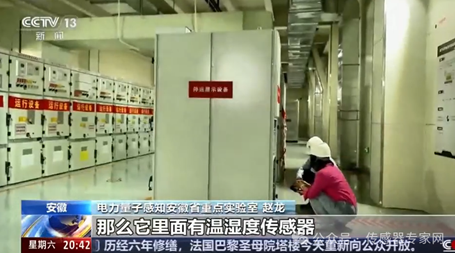
The bureau's technical team pioneered the independent introduction of cutting-edge quantum precision measurement concepts into the field of gas detection for power equipment, developing the nation's first related quantum sensor. This sensor can accurately identify the "spectral fingerprints" of gases and detect trace gases at concentrations as low as nine parts per hundred million, far surpassing the sensitivity of traditional technologies. This is equivalent to equipping power equipment health management with a "quantum stethoscope.".
Compared to traditional detection methods that take ten to several dozen minutes, this quantum gas analyzer can complete equipment defect detection within 10 seconds, significantly improving detection efficiency. It enables precise early warning during the latent fault stage, achieving "second-level alert response.".
Currently, this achievement has passed third-party testing by the national authoritative CNAS-accredited institution. It serves as a successful case of Foshan Power Supply Bureau's transition from laboratory research to practical engineering in quantum precision measurement, addressing key challenges in power equipment condition monitoring and fault diagnosis. It injects "quantum momentum" into the development of new power systems and novel energy infrastructure.